

If we could hand every one of our patients one small tube of something, it might be vaginal estrogen cream.
It's inexpensive and low dose, and it's been studied for decades. It can ease dryness and make sex comfortable again, and new research suggests it may even help keep some people out of the hospital. Yet most people have never heard of it, and many who could benefit are never offered it.
It also isn't just a menopause treatment. Estrogen levels dip at several points across a lifetime, and a little local support can make a real difference at each one. Here's what we want you to know.
First, a name for what you might be feeling: GSM
The tissue of the vulva, vagina, urethra and bladder is full of estrogen receptors. When estrogen drops, that tissue gets thinner and less elastic, and it makes less natural moisture. The healthy bacteria that keep the vagina acidic and protected start to fade too.
The medical name for this is genitourinary syndrome of menopause, or GSM. It's the updated term for what used to be called “vaginal atrophy,” and it's very common. The Menopause Society estimates it affects somewhere between 27% and 84% of postmenopausal women.
GSM can look like:
- Dryness or itching
- Pain or tearing with sex
- Needing to pee more often or more urgently
- Burning with urination
- UTIs that keep coming back
Unlike hot flashes, GSM usually doesn't fade with time. It tends to slowly get worse without treatment, which is why so many people quietly put up with it for years. The good news is that it's very treatable.
Perimenopause and menopause: more than comfort
In perimenopause and menopause, vaginal estrogen restores moisture and healthy bacteria right where they're needed. Most people notice less dryness and more comfortable sex within a few weeks, with the full benefit building over about three months.
It can also protect your health in a bigger way. As estrogen falls, UTIs become much more common, and for some they become a frustrating cycle of antibiotics. Urology guidelines recommend vaginal estrogen to help prevent recurrent UTIs in perimenopause and after menopause.
A large study published in 2026 took this a step further. Researchers looked at health records for millions of women with recurrent UTIs. Those who were prescribed vaginal estrogen were about half as likely to develop sepsis, a life-threatening reaction to infection, and had lower rates of hospitalization and death.
Because this was an observational study, it shows a strong association rather than proof of cause. But it adds to years of evidence that vaginal estrogen is protective, and it's striking given that only about 1 in 20 patients with recurrent UTIs is prescribed it.
It isn't only for menopause
GSM gets its name from menopause, but the same low-estrogen changes can show up much earlier. Here's where else we often reach for vaginal estrogen.
On hormonal birth control. Combined hormonal birth control works by suppressing ovulation, and the synthetic estrogen it contains isn't the same as the estradiol your ovaries make. With ovulation switched off, your body makes less of its own estradiol and testosterone, and some people end up with dryness or pain at the vaginal opening. A small amount of vaginal estrogen can help the tissue recover. Sometimes we pair it with topical testosterone or talk through a different birth control method.
Postpartum healing. After birth, estrogen drops sharply. If you had a tear or stitches, that low-estrogen tissue can feel tender and slow to heal. Vaginal estrogen has been studied after perineal tears and found safe to use postpartum, and some find it helps the tissue feel more like itself. Research on how much it speeds healing is still early, so we'll talk through whether it makes sense for you.
While breastfeeding or chestfeeding. Nursing keeps estrogen low for as long as you're nursing, which is why so many new parents notice dryness and painful sex months after birth. Because vaginal estrogen is so low dose and works locally, it's widely considered compatible with nursing.
Painful sex at any age. Pain with sex is common and it's never something you should just push through. When thin or dry tissue is part of the cause, treating the tissue itself is often the missing piece. Healthier tissue also means better blood flow and sensation, which can make arousal and orgasm easier.
Gender-affirming care on testosterone. Testosterone therapy lowers estrogen too, so many people on testosterone notice dryness, irritation or thinning of the vaginal tissue. Vaginal estrogen can treat that tissue directly without interfering with your testosterone goals. It works locally, and so little is absorbed into the bloodstream that it won't cause body-wide estrogen effects or undo the changes you're working toward.
How to use vaginal estrogen cream
Vaginal estrogen cream needs a prescription, but it doesn't have to be expensive. Through Mark Cuban Cost Plus Drugs, it costs about $13 a month.
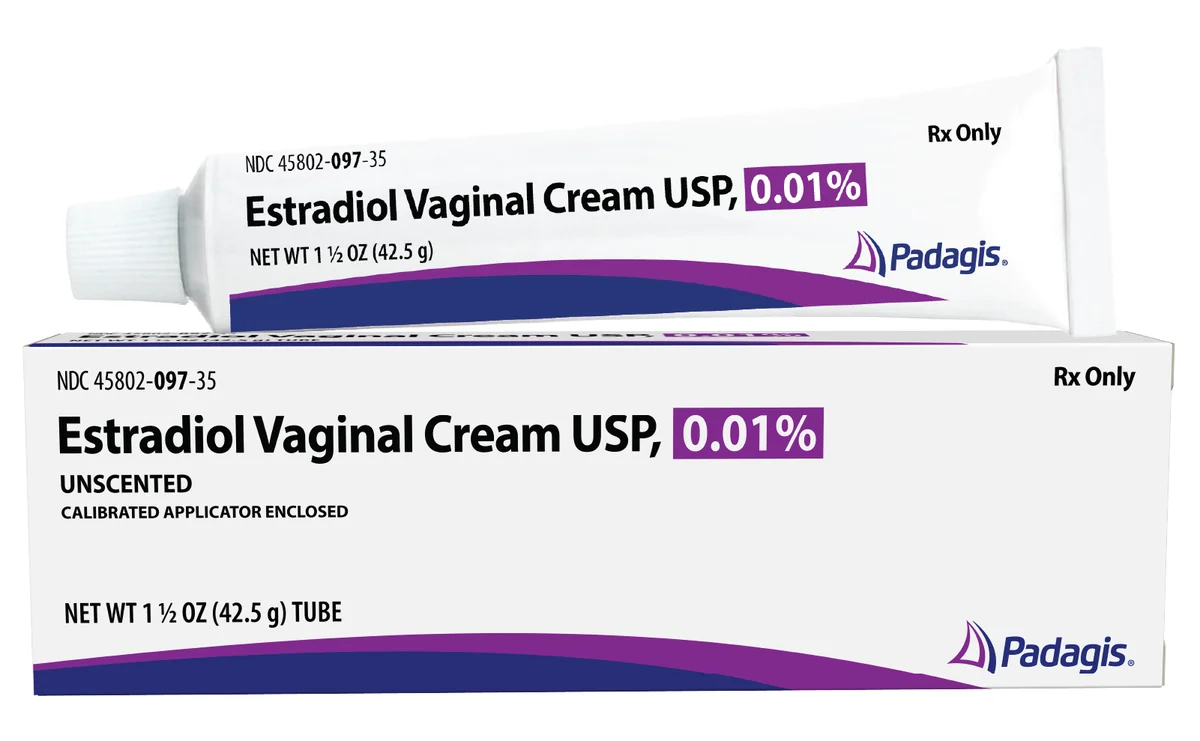
Here's how we usually recommend using it:
- Use it twice a week, at night before bed. Lying down overnight keeps the cream where it can do its work.
- Use your finger instead of the applicator if you like. Many people find that easier and more comfortable.
- Insert it into the vagina and gently massage it into all of the vaginal walls.
- Apply a small amount between the labia too, especially if you feel dryness or irritation at the opening.
- Avoid sex after applying it. Save application for nights when you won't be intimate, so the cream stays with you and isn't passed to a partner.
We'll tell you the exact amount and schedule that's right for you at your visit.
Not a cream person? There are other options
- Vaginal tablets (such as Vagifem or Yuvafem). A tiny insert placed with an applicator. They're a lower dose than the cream and less messy, though they don't treat the vulva the way cream can.
- Estring. A soft, flexible ring you place in the vagina that slowly releases a low dose of estrogen for three months at a time. Great if you'd rather not think about it.
- Femring. A similar ring, but a higher dose that's absorbed into the whole body. It can treat hot flashes as well as vaginal symptoms, so it works more like systemic hormone therapy. If you have a uterus, you'll also need a progestogen to protect your uterine lining.
- Intrarosa (vaginal DHEA, or prasterone). A nightly insert that your vaginal cells convert into small amounts of estrogen and testosterone right where they're needed. It works very well, especially for more severe GSM. It's usually not covered by insurance and can be pricier, but for the right person it's worth it.
Is it safe?
For most people, yes. Low-dose vaginal estrogen works locally, and very little reaches the rest of your body. That's why many people who aren't candidates for systemic hormone therapy can still use it. If you've had breast cancer or another estrogen-sensitive condition, it's still worth asking. We'll weigh the options carefully and coordinate with your oncology team.
As with any medication, a few people notice mild irritation or spotting at first. Let us know about any bleeding after menopause, since that always deserves a closer look.
You don't have to just live with it
Dryness and painful sex are common, but they aren't something you have to accept. Whether you're newly postpartum or deep in menopause, there's likely a simple, affordable option that can help.
At Good Energy, your first visit is a full 60 minutes, so there's time to talk about the things that are hard to bring up anywhere else.
This post is for general education and isn't a substitute for personal medical advice. Talk with your clinician about what's right for you.
Sources
- GSM definition and 27% to 84% prevalence: 2020 Menopause Society (NAMS) GSM position statement
- Summary of the 2020 NAMS GSM position statement (News-Medical)
- Sepsis finding (10.6% vs 19.4%) and lower hospitalization and death: Epic Cosmos analysis, Urology 2026
- About 5% of women with recurrent UTIs prescribed vaginal estrogen (CP24)
- Pilot RCT of vaginal estrogen on postpartum atrophy, perineal pain and sexual function
- Treatment of vestibulodynia with topical estradiol and testosterone